Preloader Close
Increase Energy Savings with Reflective Insulation Bubble Sheets

Send us Email
Blog Details
Does Reflective Insulation Prevent Condensation?
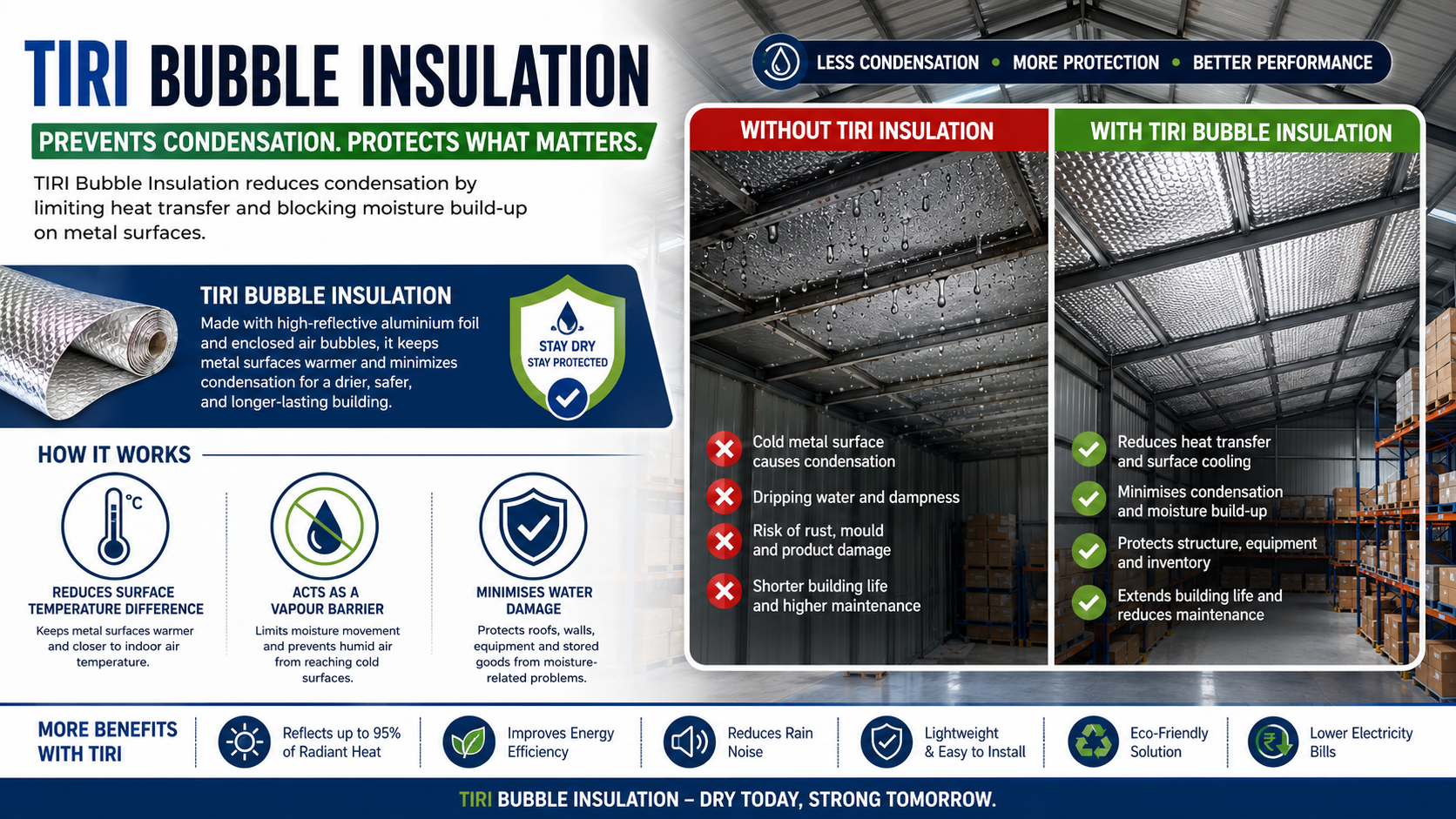
Yes. Reflective insulation helps reduce condensation by limiting the temperature difference between warm, moisture-laden air and cold metal surfaces. When installed correctly, it acts as a thermal barrier and vapour-resistant layer, reducing moisture formation and helping protect roofs, walls, equipment, and stored goods.
Why Does Condensation Form?
- Condensation occurs when warm, humid air comes into contact with a colder surface, such as a metal roof or wall. As the surface temperature drops below the air's dew point, water vapour turns into liquid droplets. Over time, this moisture can lead to corrosion, mould growth, insulation damage, and reduced building performance.
How Does Reflective Insulation Reduce Condensation?
- 1. Reduces Surface Temperature Difference
- Reflective insulation slows down heat transfer through metal roofing and cladding. This helps keep the inner metal surface closer to the indoor air temperature, making condensation less likely.
- Benefit: Less moisture forms on metal surfaces.
- 2. Acts as a Vapour Barrier
- Most high-quality reflective insulation includes aluminium foil facings that resist water vapour movement. This limits humid air from reaching cold metal surfaces.
- Benefit: Prevents moisture from accumulating inside the roof or wall system.
- 3. Minimises Water Damage
- By reducing condensation, reflective insulation helps protect structural steel, machinery, electrical systems, and stored products from moisture-related damage.
- Benefit: Longer building life with lower maintenance costs.
How TIRI Reflective Insulation Helps Prevent Condensation
- TIRI reflective insulation is engineered with high-reflectivity aluminium foil and an enclosed air layer that creates an effective thermal barrier. By reducing heat transfer and restricting moisture movement, it helps minimise condensation inside metal buildings throughout the year.
- Key Advantages
-
- o Reduces condensation on metal roofs and walls
- o Helps protect steel structures from corrosion
- o Supports a drier indoor environment
- o Reduces the risk of mould and mildew growth
- o Protects inventory, equipment, and stored goods from moisture damage
- o Improves overall thermal efficiency while managing condensation
Where Condensation Control Matters Most
- TIRI reflective insulation is particularly beneficial for:
-
- o Warehouses
- o Industrial sheds
- o Manufacturing plants
- o Cold storage facilities
- o Agricultural buildings
- o Poultry farms
- o Commercial buildings
- o Logistics and distribution centres
Best Practices for Maximum Condensation Control
- For the best results, reflective insulation should be:
-
- o Installed with sealed joints and overlaps
- o Combined with proper building ventilation
- o Used as part of a complete roof or wall insulation system
- o Installed according to manufacturer recommendations
- Proper installation ensures the insulation performs effectively as both a thermal and moisture-control barrier.
Frequently Asked Questions
- 1. Does reflective insulation completely eliminate condensation?
- No. It significantly reduces condensation by limiting heat transfer and moisture movement, but performance also depends on proper installation, ventilation, humidity levels, and the building's design.
- 2. Why does condensation occur on metal roofs?
- Condensation forms when warm, humid air comes into contact with a cold metal surface, causing water vapour to turn into liquid droplets.
- 3. How does reflective insulation reduce condensation?
- It creates a thermal barrier that keeps metal surfaces warmer and acts as a vapour-resistant layer to reduce moisture formation.
- 4. Is reflective insulation suitable for humid climates?
- Yes. It is particularly effective in humid regions where condensation is more likely to occur.
- 5. Can reflective insulation help prevent rust?
- Yes. By reducing moisture on metal surfaces, it helps minimise corrosion and extends the life of metal roofs and structures.
- 6. Does reflective insulation stop mould and mildew?
- It helps reduce the moisture that encourages mould and mildew growth, contributing to a healthier indoor environment.
- 7. Where is condensation control most important?
- It is especially important in warehouses, factories, poultry farms, cold storage facilities, commercial buildings, and agricultural structures.
- 8. Does reflective insulation require ventilation?
- Yes. Proper ventilation works alongside reflective insulation to provide the best condensation control and overall building performance.
- 9. Can reflective insulation improve indoor comfort?
- Yes. By reducing heat transfer and moisture build-up, it helps maintain a more stable and comfortable indoor environment.
- 10. Why choose TIRI reflective insulation for condensation control?
- TIRI reflective insulation combines high-reflectivity aluminium foil with advanced insulation technology to reduce heat transfer, minimise condensation, and help protect buildings, equipment, and stored goods from moisture-related damage.
Conclusion
- Reflective insulation is an effective solution for reducing condensation in metal buildings. By controlling heat transfer and limiting moisture movement, it helps keep roofs and walls drier, protects valuable assets, and extends the life of the building.
- TIRI reflective insulation combines thermal performance with moisture control, making it a reliable choice for industrial, commercial, and agricultural applications.