
Preloader Close
Increase Energy Savings with Reflective Insulation Bubble Sheets

Send us Email
Blog Details
Can a Roof Ventilator Reduce Heat Inside Industrial Buildings?
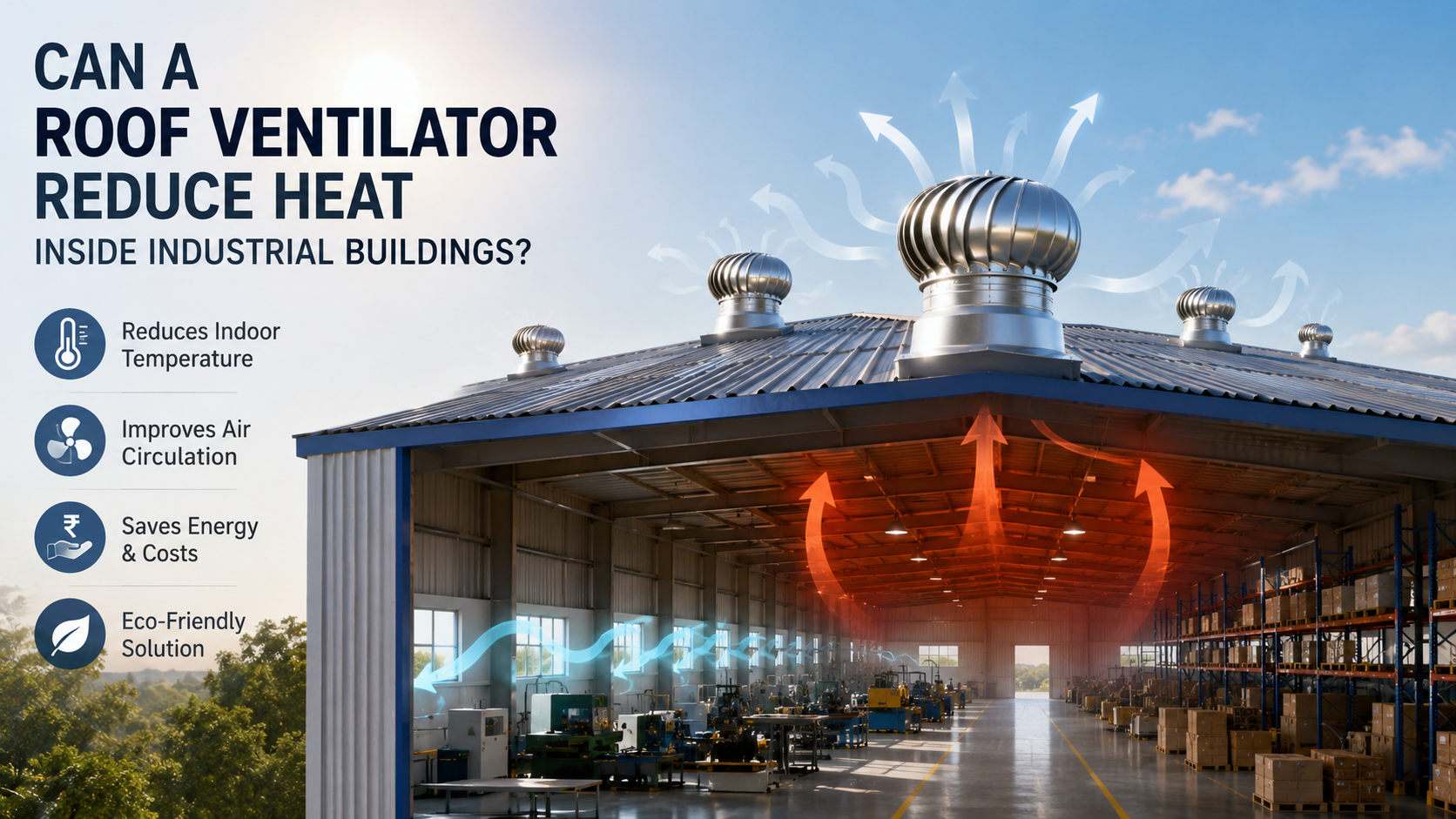
If your factory, warehouse, or industrial shed feels much hotter than the outdoor temperature, your roof is likely the reason. Metal roofs absorb a large amount of heat during the day, causing hot air to build up inside the building. This not only creates an uncomfortable work environment but also increases cooling costs and affects productivity.
A wind-driven roof ventilator is a simple, energy-efficient solution that helps remove trapped hot air without using electricity, creating a cooler and healthier indoor environment.
How Does a Roof Ventilator Reduce Heat?
- Hot air naturally rises and collects beneath the roof. A roof ventilator uses wind energy to rotate its turbine, continuously pulling this hot air out while allowing cooler fresh air to enter the building.
-
This natural airflow helps:
- o Reduce heat buildup under the roof
- o Improve indoor ventilation
- o Create a cooler and more comfortable workspace
- o Lower the load on cooling systems
Benefits of Installing a Roof Ventilator
- 1. Lower Indoor Temperature
- Continuous ventilation helps reduce heat accumulation, making industrial spaces more comfortable.
- 2. Save on Energy Costs
- Since wind-driven ventilators require no electricity, they reduce reliance on exhaust fans and air conditioning.
- 3. Improve Air Quality
- They remove hot, stale, and humid air while promoting fresh air circulation.
- 4. Enhance Workplace Comfort
- A well-ventilated environment can improve employee comfort and support better productivity.
- 5. Low Maintenance
- With no electrical components, roof ventilators are durable, reliable, and require minimal maintenance.
Where Can Roof Ventilators Be Used?
-
Roof ventilators are ideal for:
- o Warehouses
- o Factories
- o Manufacturing Units
- o Industrial Sheds
- o Workshops
- o Commercial Buildings
- o Storage Facilities
Why Choose TIRI Aero Vent with Polycarbonate Base?
- TIRI Aero Vent with Polycarbonate Base is designed to deliver efficient, maintenance-friendly ventilation for industrial and commercial buildings.
-
Key advantages include:
- o Wind-powered operation with no electricity required
- o Durable stainless steel construction
- o Continuous natural ventilation
- o Improved indoor air quality
- o Cost-effective and eco-friendly performance
Frequently Asked Questions
- Can a roof ventilator really reduce heat inside an industrial building?
- Yes. It continuously removes trapped hot air from beneath the roof, helping maintain a cooler indoor environment.
- Does a roof ventilator require electricity?
- No. TIRI Aero Vent operates using natural wind energy, making it an energy-efficient ventilation solution.
- Can roof ventilators help reduce electricity bills?
- Yes. By improving natural airflow and reducing the need for powered ventilation, they can help lower energy consumption.
- Are roof ventilators suitable for warehouses and factories?
- Absolutely. They are ideal for warehouses, factories, workshops, manufacturing units, and other industrial buildings.
- Do roof ventilators require regular maintenance?
- Very little. Their simple, wind-powered design ensures reliable performance with minimal upkeep.
Conclusion
- A roof ventilator is a practical and cost-effective way to reduce heat inside industrial buildings. By using natural wind energy to remove hot air, it creates a cooler, healthier, and more energy-efficient workspace.
- If you're looking for a reliable ventilation solution for your factory, warehouse, or industrial shed, TIRI Aero Vent with Polycarbonate Base offers an effective combination of performance, durability, and long-term energy savings.

